
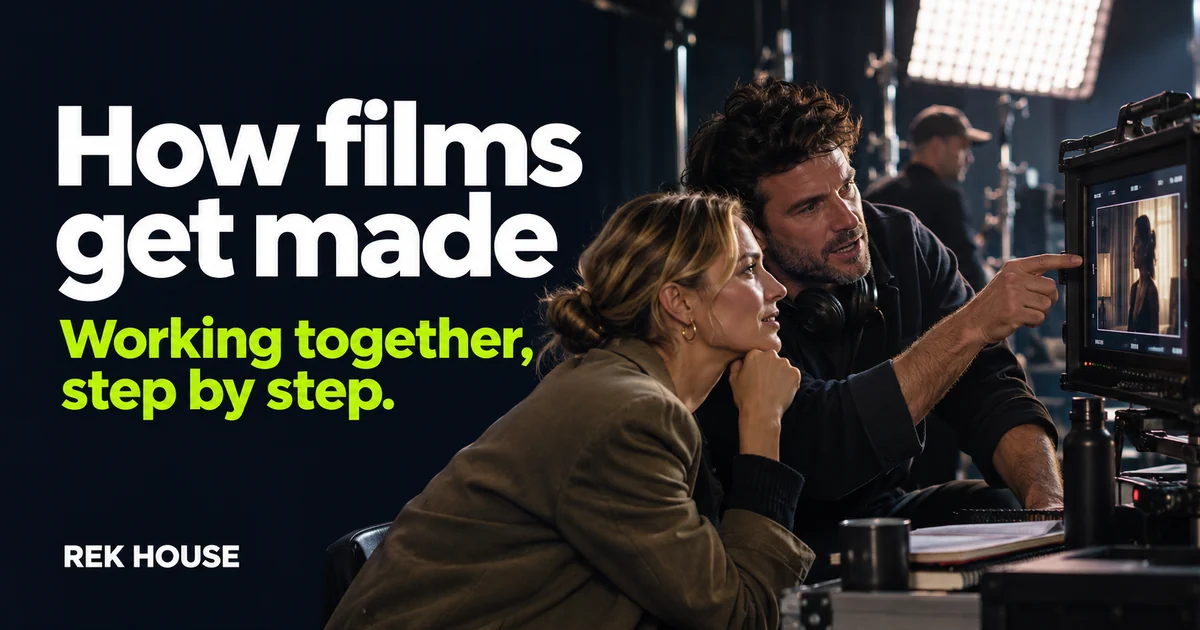
1. Interview and brief
We begin with the business goal, audience and publishing situation. The brief becomes a shared source of truth for decisions, responsibilities and approvals.
2. Script and creative direction
Research is translated into a concept and script. A moodboard defines the visual world, while a shot list or storyboard makes the production logic visible.
3. Budget and pre-production
The scope is turned into a detailed plan covering team, equipment, cast, locations, set design, travel, licences and final formats. The schedule confirms when the client needs to make key decisions.
4. Production
The crew records interviews, performance, product and supporting footage according to the plan. Direction and production management protect both the story and the working day.
5. Editing and post-production
The editor builds the narrative. Sound, music, colour, graphics, animation and subtitles create the final experience. The client reviews consolidated versions in agreed feedback rounds.
6. Delivery
We export the master and required channel variants, check technical quality and organise the final files. The project can then become the starting point for a wider content library.
Assign ownership before creative work
Working with Rek House begins with the audience, business goal and required materials. The client does not need a finished script. We need enough context to define the task and identify product expertise, locations and approval owners.
Name one coordinator who can consolidate information from marketing, sales and specialists. In a public organisation, include documentation and acceptance requirements. For an agency, agree who communicates with the end client and how feedback reaches the production team. These arrangements protect the schedule more effectively than assuming everyone will be available when needed.
Confirm the scope rather than relying on assumptions
The proposal should define deliverables, languages and feedback arrangements. If creative development is included, agree what information the client supplies and who checks factual accuracy. Different filming locations, additional interviews or new versions can change the cost and timing.
Before the shoot, prepare access, contributors and any restricted areas. Check what cannot be shown. Experts do not need to act like presenters: the interview approach can help them explain familiar work naturally. The exact production method depends on the agreed format, not a single fixed package.
Consolidate review and delivery
Return one timestamped feedback list after collecting stakeholder comments. Distinguish a correction from a new creative direction. Agreed revision rounds do not necessarily cover changing a previously approved message or recording new footage.
Final exports, raw recordings and editable project files are different deliverables. Agree any handover of source material before commissioning. Music, stock and contributor usage should fit the intended channels and advertising scope. Before closing the project, assign publication and sales distribution so the finished files are actually used.
Choose the right guide for the task
This page explains supplier-specific collaboration. For the general phases of making a film, read promotional production stages. Prepare your task with the brief template, review our work and consider ongoing collaboration when needs recur.
Prepare your contributors
If your contributors have limited filming experience, see how to prepare experts to speak on camera. It explains preparation and practical support on set.