
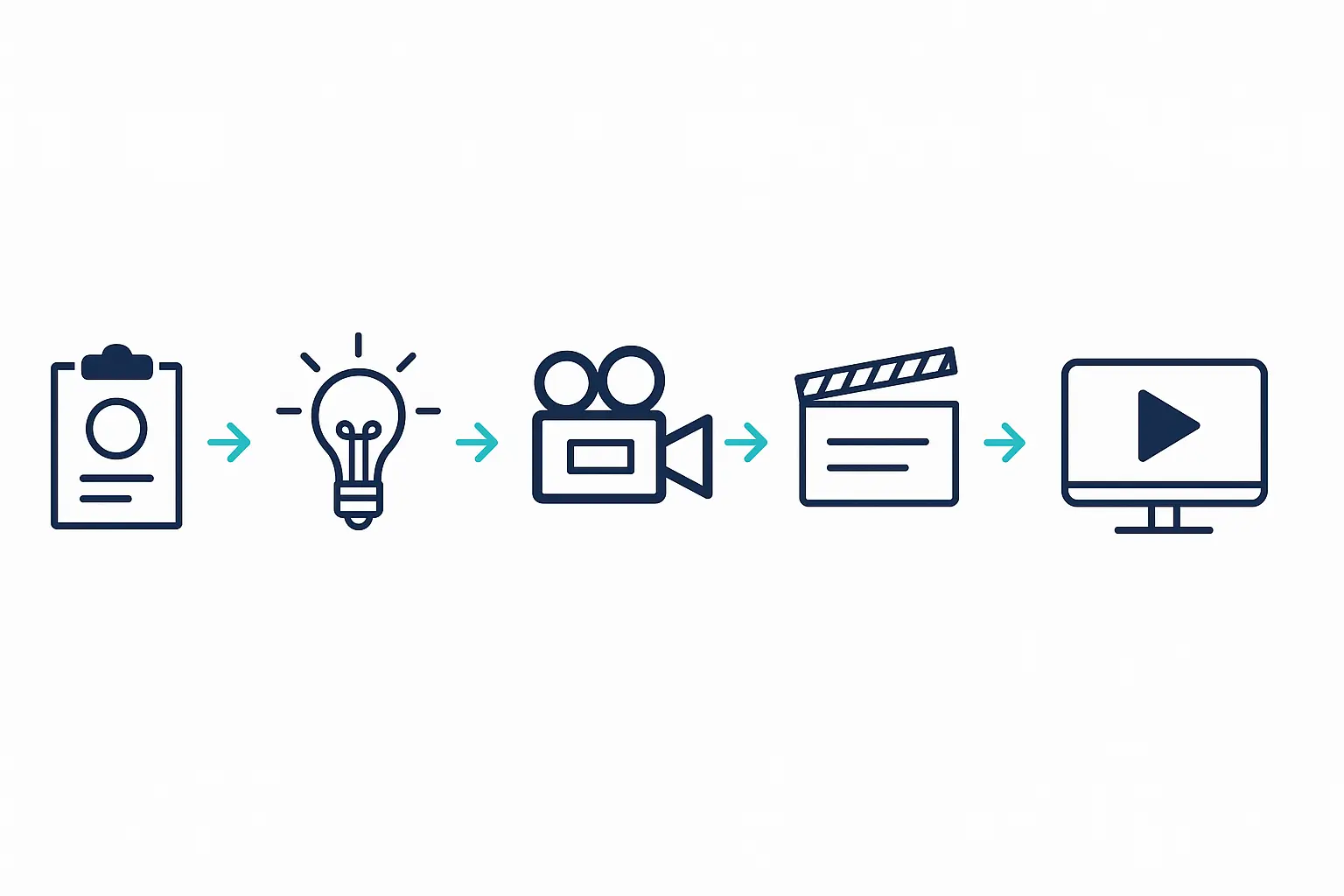
1. The brief
A useful brief describes the audience, business goal, situation of use, mandatory information, brand requirements, timing and budget. It does not need to contain a finished creative idea.
The more clearly the team defines the decision the film should support, the easier it becomes to choose the right format.
2. Concept and script
The concept defines the organising idea. The script then turns it into words, scenes, interviews and a call to action. Technical accuracy and audience clarity are reviewed before production costs are committed.
3. Pre-production
The producer coordinates casting, contributors, locations, permissions, schedule, crew, equipment, art direction, wardrobe, travel and risk. A call sheet turns these decisions into one working plan.
4. Production
A prepared set creates room for good performance and adaptation. The director protects the story, the producer protects the schedule and the crew captures image and sound to the required technical standard.
5. Post-production
Editing finds the final rhythm and argument. Sound design, music, colour, graphics, animation and subtitles make the film coherent. Feedback should be consolidated into agreed rounds.
6. Approval and distribution
Final exports should match the channel: website, paid media, LinkedIn, YouTube, presentation or event screen. Archive project files and define any music, talent or stock licence limits.