

Video ads with real people sell more
- Jun 30
- 11 min read
When an ad isn't working, most companies start by tinkering with their campaign. They change audiences, budgets, placements, headlines, formats, and ad panel settings. Sometimes this helps, but usually the problem is simpler: the ad isn't getting attention, and without attention, there are no conversions.
Fortunately, there is a simple solution: get as many people as possible in your video ad!
What's the problem? The human brain, because it's lazy.
Our brain has been shaped by evolution and the history of our species. It is inherently energy-efficient and lazy. It doesn't analyze everything from scratch, but looks for quick shortcuts, signals, and patterns.
A user scrolling through TikTok, Instagram, YouTube Shorts, or LinkedIn isn't watching an ad like a sales pitch. They're not patiently waiting for the punch line, they're not analyzing product features, they're deciding in a split second whether to keep looking or scrolling.
TikTok Marketing Science shows how ruthless the first seconds are: 50% of the impact of an ad on TikTok is realized in the first 2 seconds, and the first 6 seconds are responsible for 90% of the impact on ad recall and about 80% of the impact on brand awareness.
What's the solution? The human brain, too, because people want to watch people.
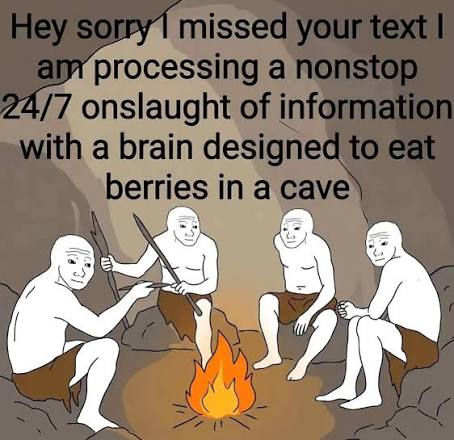
Despite all its limitations, our brain has one great strength: it is perfectly adapted to reading faces, emotions, and social signals.
For thousands of years, survival depended on this. It was necessary to quickly recognize whether someone was calm, hostile, interested, trustworthy, confused, or dangerous.
As a species, we don't outperform many animals in reflexes, but we make up for it in social analysis. We can instantly read faces, gazes, gestures, tone of voice, and microreactions.
No matter what technologies emerge next, our brains still function a bit like cavemen.
Now let's use it
Analysis of TikTok's creator ads indicates that showing a person or creator in the first 2 seconds increases hooking power by 50% and ad recognition by 32%.
The face effect is also confirmed by research on social media engagement. An analysis of over a million Instagram photos showed that photos with human faces were 38% more likely to receive likes and 32% more likely to be commented on than photos without faces (Bakhshi, Shamma, Gilbert, 2014).
In practice, this means one thing: if a video ad shows a person showing, saying, or reacting to something, the video has a better chance of breaking through the automatic scrolling.
A face, voice, gesture, glance into the camera, reaction to a product, or a quick phrase like "if you have this problem, check this out" act as a natural social cue. The brain responds more quickly to another person than to a static arrangement: logo, slogan, product, price.
Video ads featuring people work because they capture attention faster, build trust more easily, and better demonstrate the product in real-world use. A face attracts attention, a voice creates a sense of direct contact, and a product demonstration reduces purchase uncertainty.
This is especially important in e-commerce, B2B, SaaS, beauty, technology products, and all categories where a customer needs to see, understand, or feel the product before purchasing.
A face builds trust, a packshot doesn't
A product ad might show an object. A human ad shows a situation: a problem, a solution, emotions.
.
A product on a white background says, "This is what I look like." The person using the product says, "This is how it works in my life." And thanks to mirror neurons, the viewer can imagine themselves in a similar situation.
That's why videos with people work especially well when a customer has questions, doubts, or needs confirmation that a product will actually solve their problem.
In e-commerce, it might be a cosmetic, supplement, vacuum cleaner, clothing, tool, pet food, app, or home furnishings item. In B2B, it might be a system, service, machine, technology implementation, or a process that's difficult to explain with graphics alone.
A brand statement alone has limited power. When a brand speaks, the recipient knows they're hearing a sales pitch. When they see a person demonstrating use, recounting an experience, or explaining a problem in human terms, the message becomes closer to a recommendation.
This is where the power of UGC comes from.
UGC works because it resembles interpersonal recommendation, not advertising.
UGC, or User Generated Content, is one of the most powerful trends in digital advertising. Its power stems not only from its "phone-recorded" aesthetic; it's about credibility.
Good UGC advertising doesn't start with a logo and a slogan. It starts with a situation, problem, or observation that the audience can quickly identify with.
For example:
“I didn't know I was using this product wrong.”
“If you have a dog, you know this problem.”
“I’ve been testing it for two weeks and I can really see the difference.”
“At first I thought it was just another gadget, but…”
Such messages sound closer to conversation than advertising. Therefore, they often work better than polished but lukewarm product creations.
Research on product content on YouTube shows that credibility, viewing pleasure, ease of imagining the product, and usefulness of the medium increase purchase intention.
This is evident in, among others , the 2022 study by Silaban et al. on product reviews on YouTube and the 2022 study "Effect of product presentation videos on purchase intention."
In turn, a study of unboxing videos on YouTube showed that parasocial interaction with the creator, i.e. a sense of a one-sided relationship with the person being viewed on screen, was associated with higher purchase intention (Bhattacharya, Dhingra, 2023).
In UGC advertising, three things are most important: the person, the specifics, and the situation. The viewer sees who's talking, what they're talking about, and why it might affect them. The product ceases to be an abstract object and becomes a tool in someone's life.
The gaze, gesture and voice guide the recipient
Advertising with a human has another advantage: it can lead the viewer's attention.
If a person in an ad is looking at a product, the viewer is more likely to direct their attention in the same direction. If a gesture indicates a specific function, the viewer more easily understands what to look for. If they speak directly to the camera, they create a quick sense of connection.
Eye-tracking studies of advertising have shown that the presence of a face and the direction of a model's gaze influence attention, ad recall, brand evaluation, and purchase intention. Of particular importance is whether a person's gaze leads the viewer toward the product.
This is crucial in performance advertising, where there's no time for chance. In 15 or 20 seconds, you need to guide the viewer through a short path: attention, problem, solution, proof, call to action.
The person in front of the camera can lead this journey naturally. They can name the problem, point to the product, show the effect, react emotionally, and say the CTA in a way that sounds more natural than "buy now."
The customer wants to see the product in use
One reason why ads featuring people sell so well is that they can show the product in action. The customer doesn't have to imagine how something works. They see it.
In e-commerce, this is crucial. A product photo demonstrates appearance. A demo demonstrates function, scale, convenience, speed, impact, and context. For the customer, this is often more important than another feature description.
An e-commerce study found that a video showing product use can increase purchase intention more strongly than a video showing only the product's appearance, as it helps the viewer better evaluate the product and more easily imagine its use (Cheng et al., 2022).
That's why formats like test, unboxing, comparison, before-and-after, user feedback, feature demonstration, problem and solution work so well. They answer the question on the customer's mind: "Will this work for me?"
This is where video truly begins to support sales. It not only showcases the product but also reduces pre-purchase uncertainty.
Animation and packshot have their place, but they cannot replace a human being.
Animation works well for explaining processes, applications, technologies, data, diagrams, or functions that aren't easily captured on camera. Packshots work well when the product is already familiar and the customer needs a simple incentive to buy.
The problem begins when an animation or packshot is intended to replace the entire human experience with the product.
A simple animation can convey that a product is comfortable. The person in front of the camera can demonstrate comfort in movement, reaction, use, and speed. An animation can convey that something works quickly. The user can demonstrate what this speed looks like in a normal situation.
In sales advertising, information alone is often not enough. The recipient also needs to feel that it fits into their world.
Authenticity works, but randomness doesn't
It's worth adding an important nuance. An ad featuring a human doesn't work simply because someone is standing in front of the camera. A weak ad with an actor, artificial text, and forced emotion can fare worse than a good animation.
The best ads featuring people are natural yet well-designed. They look effortless, yet there are specific decisions behind them: what we show in the first second, how we frame the problem, when the product appears, how we build proof, and when we transition to the CTA.
A good UGC ad or an ad featuring a real person should have a strong hook, a specific problem the recipient is facing, a quick demonstration of the product, natural language, a credible response, one main message, and a clear conclusion.
Form alone isn't enough. Research on short video marketing shows that short videos can increase purchase intent, but excessive, overly long, or intrusive advertising can have the opposite effect.
Therefore, an "authentic ad" can't simply be an amateur recording. Authenticity doesn't mean a lack of strategy. It means that the strategy doesn't overflow from every frame.
What does this mean for e-commerce brands?
For e-commerce, the conclusion is very practical: instead of producing one perfect product ad, it is better to build a library of creations.
Performance advertising campaigns wear out quickly. A campaign that worked for two weeks can lose its effectiveness over time. This isn't always because the product has lost its appeal, but often because viewers have seen the creative too many times.
This is why e-commerce brands should test different types of video ads:
product test,
unboxing,
comparison,
before/after,
user reaction,
response to a customer objection,
educational video,
video for product card,
UGC advertising,
UGC premium,
advertising with an expert,
advertising with the creator,
short demonstration of the functions.
In e-commerce, combining the customer's perspective with the specifics of the product works particularly well. Customers don't want to watch another video claiming a product is "innovative" or "highest quality." They want to see if this product will solve their problem.
What does this mean for B2B companies?
In B2B, video with real people is just as important, although it works a little differently.
Purchasing decisions in B2B are more risky. Customers don't buy impulsively. They typically need to explain their choices to their superiors, team, management, or the end customer. They need trust, proof, and a clear explanation of value.
This is why they work so well:
case study video,
customer statements,
implementation videos,
explainer video with the presenter,
product video,
sales materials,
employer branding videos,
video with experts,
materials from events and conferences.
In B2B, real people help build credibility, which is paramount when investing millions of złoty. The client sees who is using the solution, what the problem was, what the implementation looked like, and what real changes have been made.
Creation matters more than many companies think
In digital campaigns, broadcasting alone will not save weak creative.
Nielsen Catalina Solutions indicates that creative quality was responsible for approximately 49% of sales lift from advertising, which is more than media or targeting.
Google and Kantar report that ads that follow the ABCD principles can yield an average 30% increase in short-term sales likelihood and a 17% increase in long-term brand contribution.
For brands, this means one thing: the biggest leverage often lies not in the next campaign setting, but in what we actually show people.
You can have a well-designed campaign, precise targeting, and a reasonable budget, but if the creative doesn't capture attention and lead the recipient to a decision, the results will be limited.
When does an animation or packshot still make sense?
Animation works well when you need to simplify a complex topic. Packshots work well when the product is already familiar and the customer needs a quick purchase incentive. Graphics work well in remarketing, promotions, simple messages, and campaigns with a large number of variants.
The best advertising system usually combines several formats, but video with people should be the foundation.
How to plan a video ad with a human?
A good video ad featuring a real person should start with a question: what decision do you want the viewer to make after watching the video?
Only then should you consider the format. A cold traffic ad will look different, a remarketing video different, a product page different, and a B2B case study still different.
The simplest structure looks like this:
First, capture attention. Show a problem, situation, or strong reaction.
Then quickly define the context. The viewer needs to know if this video is for them.
Then, show the product in use. Don't just talk about it, but show how it works.
Add evidence. This could be an effect, a comparison, an opinion, a number, a demonstration, or a user experience.
Finally, provide a clear CTA. Tell the recipient what to do next.
It sounds simple, but its power lies precisely in its simplicity. In digital, ads that quickly guide the viewer through a decision win.
FAQ: Video Ads with People
Do video ads with people always convert better?
Not always. The mere presence of a person in an ad doesn't guarantee results. An ad must have a good hook, a specific issue, a credible message, a clear product presentation, and a meaningful CTA. A person on screen increases the chance of attention and trust, but a weak script can still ruin the result.
What works better: UGC or professional product advertising?
It depends on the campaign stage and product category. UGC often works well in social media and performance marketing because it looks natural and resembles a recommendation. Professional product advertising is more effective when a brand needs a strong aesthetic, image consistency, or as material for a landing page, launch campaign, or B2B presentation. It's best to test both formats.
Does a UGC ad have to be recorded on a phone?
No. UGC advertising should look natural, but it doesn't have to be technically weak. Premium UGC often works best—material that has the ease of content from an online creator but is better planned, shot, and edited.
Which video ads work best for e-commerce?
In e-commerce, ads that show the product in use work well: tests, unboxings, comparisons, before/afters, objection responses, feature demonstrations, and educational materials. Formats that quickly demonstrate the customer's problem and the specific effect of the product are particularly powerful.
What video ads work best in B2B?
Case study videos, testimonial videos, explainer videos, product videos, sales materials, and expert videos all work well in B2B. Their purpose is not only to attract attention but also to build trust and help the customer understand the value of the offer.
Why are the first seconds of an ad so important?
Because on social media, viewers decide very quickly whether to continue watching. TikTok Marketing Science indicates that a significant portion of an ad's impact is realized in the first few seconds. If an ad doesn't capture attention from the beginning, the rest of the video may not be watched at all.
Application
Video ads featuring real people often sell better because they are closer to how we actually make purchasing decisions.
We rarely buy based solely on specifications. We want to see usage, feedback, context, and proof that the product works in real life.
A face captures attention. A voice builds rapport. A gesture guides the gaze. A demonstration reduces uncertainty. A story helps a brand be remembered.
So the question for brands isn't just, "Is it worth making videos with people?" The better question is, "Who can best guide a customer through a purchasing decision?"
Sometimes it will be the creator of UGC. Sometimes it will be an expert. Sometimes it will be a customer. Sometimes it will be a company employee. It's important that the ad not only showcases the product but also helps the viewer imagine themselves using it.
In digital, this is often what decides whether an ad will be scrolled or will start selling.
Need video ads that help you sell?
At Rek House, we create product ads, premium UGC, videos for Meta Ads, TikTok Ads, YouTube, landing pages, product cards, and performance campaigns.
We combine video production with marketing thinking. Before we begin recording, we determine where the material will be used, who it will convince, and what decision it will trigger.
If you want to create a video that not only looks good but actually supports sales, write to us and tell us what you want to promote.
Sources
TikTok Marketing Science: Resonance: A Key Factor For Ad Effectiveness
Cheng et al.: Effect of Product Presentation Videos on Consumers' Purchase Intention
Adil, Lacoste-Badie, Droulers: Face Presence and Gaze Direction In Print Advertisements
Bhattacharya, Dhingra: YouTube “Unboxing:” An Influencer of Purchase Intent
Nielsen: When it Comes to Advertising Effectiveness, What is Key?
Nielsen Catalina Solutions: Five Keys to Advertising Effectiveness
Gao, Wu: The Effect of Short Video Advertisements on Consumers' Purchase Intention

Comments